|
BAYER AND CLASS I PESTICIDES IN INDIA
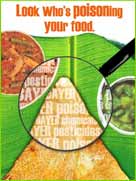
 India producing 90,000 metric tones of pesticides ranks as the largest pesticide industry in the whole of Asia and the twelfth largest in the entire world. Ignorant and indiscriminate use of pesticides has ravaged our land and has been the single largest factor for water pollution and food contamination in the country.
Bayer is one of the leading agro-chemical companies in India. It holds nearly one fourth of the market share in the Indian pesticide industry (22%), with around 52 products, including formulations. To date, Bayer produces and markets some of the deadliest pesticides known to humankind. Way back in 1995, Bayer had promised to phase out some of the deadly pesticides they were bringing to the shelves. They are yet to deliver on their word. That Bayer is clearly following double standards is evident from the fact that a majority of the following pesticides, manufactured in India are not allowed in the home country of Bayer, Germany.
Read on to know more of the Class I pesticides that Bayer continues to manufacture and sell in the Indian markets.
1. Methyl Parathion:
Trade Name- FOLIDOL DUST 2% DP & METACID 50EC
Classified as Class I a by the WHO, this pesticide falls under the Organophosphate category. The pesticide is known for its similarity with nerve gas, and was introduced into the markets in the early 1950s. Exposure to high doses through inhalation or dermal contact can cause human fatality. Prolonged exposure to moderate levels may result in impaired memory or insomnia. Other acute effects are blurred vision, muscle contractions, slurred speech, eventual paralysis etc. Chronic effects include impaired memory and concentration, severe depressions, speech difficulties, irritability and confusion, nightmares etc. Like other organophosphate insecticides, methyl parathion is a cholinesterase inhibitor . It is one of the pesticides identified for inclusion in the Prior Informed Consent Procedures of the Food and Agriculture Organization on the grounds of causing problems under conditions of use in developing countries. This deadly pesticide had to be withdrawn from German markets due to public pressure in 1989. Other countries like Cambodia, China, US, Japan, Tanzania, Colombia, Korea, Malaysia, Bangladesh, Indonesia and Srilanka have banned or restricted it. As early as 1995, 14 countries including the UK had banned Methyl Parathion, while 13 unregistered it and 4 put it under severe restriction.
2. Monocroto-phos:
Trade Name-BILPHOS 36SL
This is an organophosphorus (OP) compound categorized as Class Ib by WHO (Highly Hazardous). It is a known cholinesterase inhibitor and there is no conclusive or sufficient data that it is not carcinogenic or genotoxic. This pesticide incidentally is one of the many that get mass produced and consumed in large volumes in our country. This chemical has been responsible for deaths resulting from accidental or intentional exposure. It is highly toxic orally, as well by inhalation or absorption through the skin. Early symptoms of poisoning may include excessive sweating, headache, weakness, giddiness, nausea, vomiting, hyper salivation, abdominal cramps, diarrhea, blurred vision and slurred speech. Monocrotophos has also been shown to cause delayed nerve damage. Monocrotophos may possess potential for groundwater contamination. The chemical is one of the most toxic pesticides to birds, is extremely toxic to other wildlife and highly toxic to bees.
As far as its use goes in other countries, these are the statistics. 19 countries have banned or restricted this chemical, while it is illegal to import this chemical into 46 countries. Countries like Libya, Australia, US, Indonesia and Hungary have banned the chemical. The product was withdrawn from use in the US. This is also not used in the UK. Germany, Kuwait and Sri Lanka have restricted use of it.
3. Oxydemeton Methyl:
Trade Name-METASYSTOX
Categorized under Class I b and Highly Hazardous, this is also an Organophosphorous compound, used mainly as an insecticide. It is a potential groundwater contaminant, and a developmental and reproductive toxin as per PAN (Pesticides Action Network). German EPA considers it as a potential and confirmed EDC (Endocrine Disrupting Chemical). On several occasions, Greenpeace campaigners in the course of their work in Warangal and Raichur have come across farmers who have been poisoned by Metasystox. The product is closely identified with its trade name in many parts. Government studies on pesticide residues in India, on vegetables have shown more number of samples contaminated with pesticides like Metasystox and Methyl Parathion . Demeton, the parent chemical of this deadly pesticide has been banned in countries like Kuwait, Belize, China, UK and Thailand.
4. Triazophos:
Trade name-HOSTATHION
This is a Class I b pesticide; an acknowledged organophosphorus insecticide not registered in the US. Known cholinesterase inhibitor. This is listed as one of the pesticides that most often show up as residue in some national monitoring programs in Europe. Triazophos pesticide residues were found to be at levels where exposures will be above the acute reference dose for both adults and toddlers. The World Health Organization estimates that there are in total three million acute severe cases of pesticide poisonings and 20,000 unintentional deaths each year, mostly in developing countries, from organophosphates (like Triazophos) alone. Indonesia has banned its use and the US has not registered it.
5. Edifenphos:
Trade name-HINOSAN 50 EC
This belongs to Class I b pesticide, classified as Highly Hazardous. This is an OrganoPhosphorus insecticide. It is also a known cholinesterase inhibitor. The deadly chemical has been clearly roved to kill fish and cause severe damage to marine life . OPs are all derived from phosphoric acid. They are generally among the most acutely toxic of all pesticides to vertebrate animals. OPs work by inhibiting important enzymes of the nervous system, which play a vital role in the transmission of nerve impulses. Other consequences may follow high acute exposures. From one to several weeks after exposure, organophosphate - induced delayed neuropathy (OPIDN) [nerve damage] may set in.
Denmark has banned this chemical. This pesticide is part of a list of pesticides that are not approved for use by farmers trading with Grenada & Trinidad and Tobago.
That Bayer is still manufacturing these banned pesticides in India is a pointer to their casualness of approach to our life and Public Health. Couple this with the glaring fact that India has an unclear pesticides policy. All linkages between pesticides and environment and Public Health either does not get the weightage it should or plainly gets ignored in this country. On the issue of pesticides, we as consumers have remained silent spectators for long. Its high time we joined hands to ensure the total phasing out of these banned pesticides from our homes and markets forever.
Click here to view Recent Stories
Click here to view Press Releases
Click here to visit our Document Repository on GE Reports
|